Tripped Circuit Breaker: What It Means and What to Do
A circuit breaker that keeps tripping is actually doing its job, cutting power before something overheats or shorts out.
The real question is why it keeps happening.
Ring (02) 9538 7444 and we'll talk you through the likely cause before anyone even gets in the van, often same or next day, with no obligation to book on the spot.
What a Tripped Circuit Breaker Actually Means
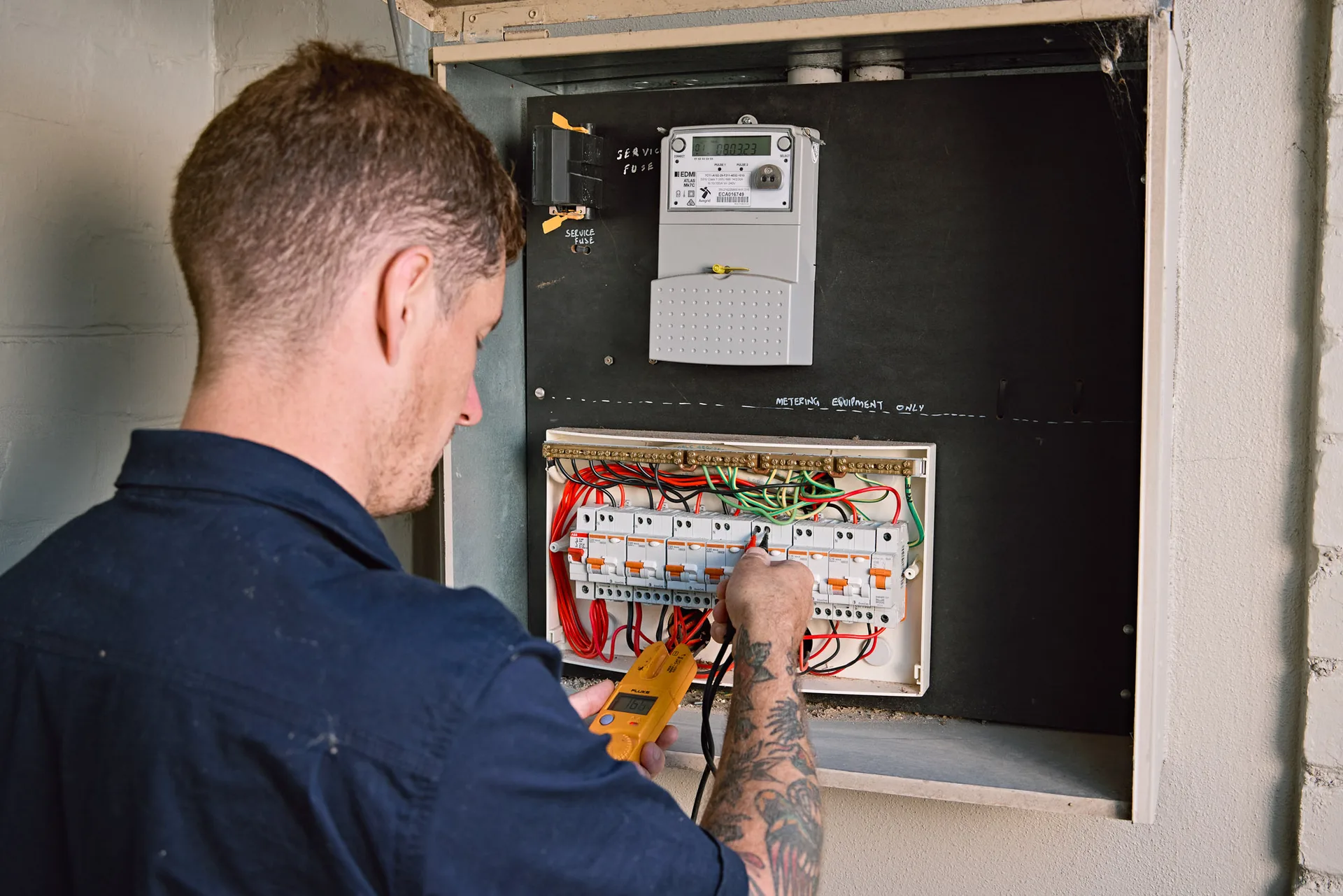
A breaker trips when it detects more current flowing through a circuit than it's rated to carry safely, every single time. That protective trip is the system working correctly, not a sign of failure on its own.
What actually pushed the circuit past that threshold could be a fault, an overload, or one appliance drawing too much on its own.
Reset it once, and if it holds steady, that's useful information in itself. If it trips again straight away, resetting it further just delays finding the actual cause.
Is a Tripped Breaker Dangerous?
One trip because a heater and a kettle happened to run together isn't dangerous. Cut the load and it should hold once reset.
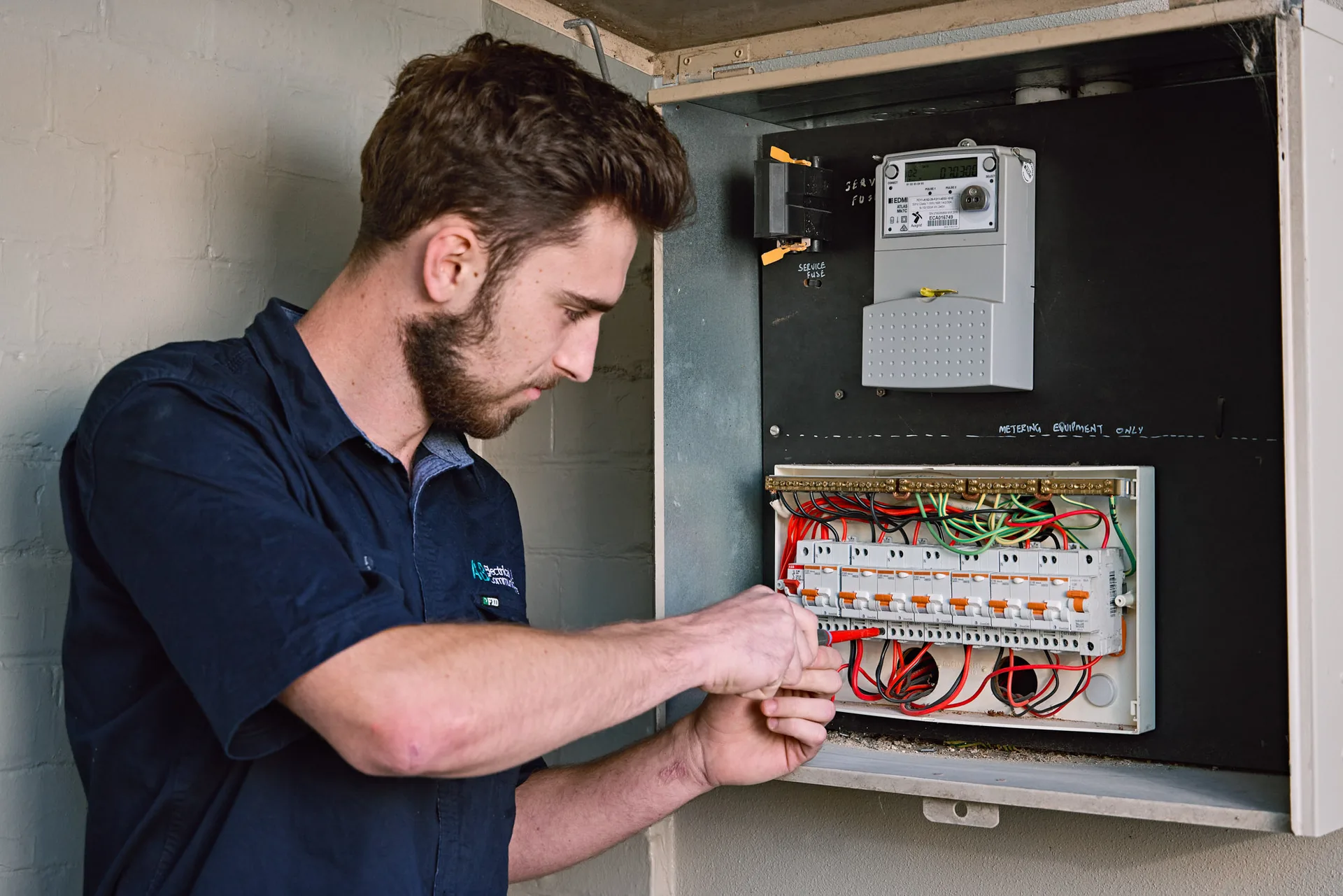
A breaker that trips repeatedly, especially with little or nothing plugged in, points to a genuine fault and needs a proper look.
Any heat, smell, or visible scorching at the switchboard changes the picture entirely. Leave it off, don't touch it again, and get a technician there fast.
The pattern to watch is frequency, not just whether it trips at all. Once a week is worth booking a look.
Multiple times in a single day is worth calling about right now.
Six Causes, From Common to Rare
Here's the shortlist behind most repeat trips.
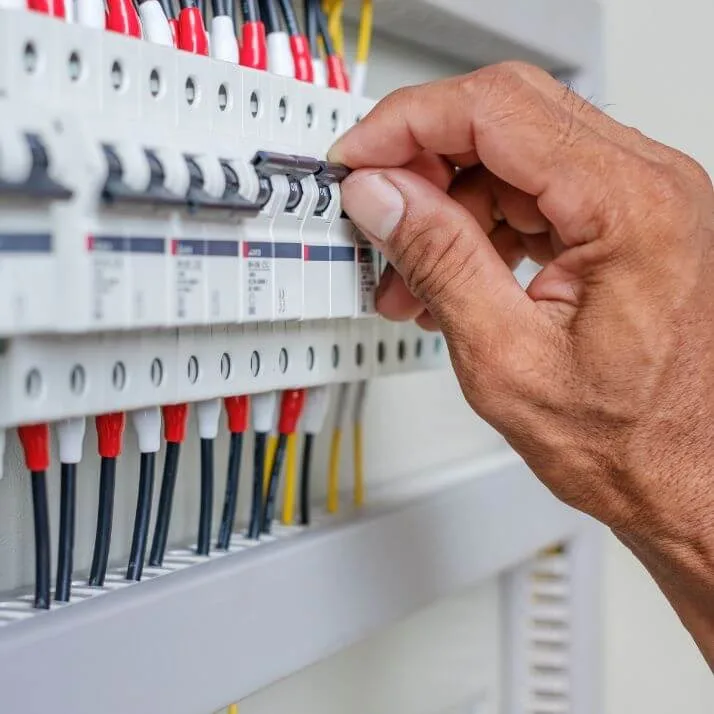
- An overloaded circuit, simply asked to carry more devices than it was built for
- A faulty appliance, pulling excess current or shorting internally
- A loose connection, anywhere from the breaker terminal along the circuit
- A breaker reaching the end of its service life
- Wiring damage, whether from age, pests, or a past renovation
- Moisture inside the switchboard, particularly after heavy rain
Some of these you can rule out yourself in a minute. Damaged wiring is a different matter and genuinely needs on-site testing before anyone can call it accurately.
The Myth Worth Dropping
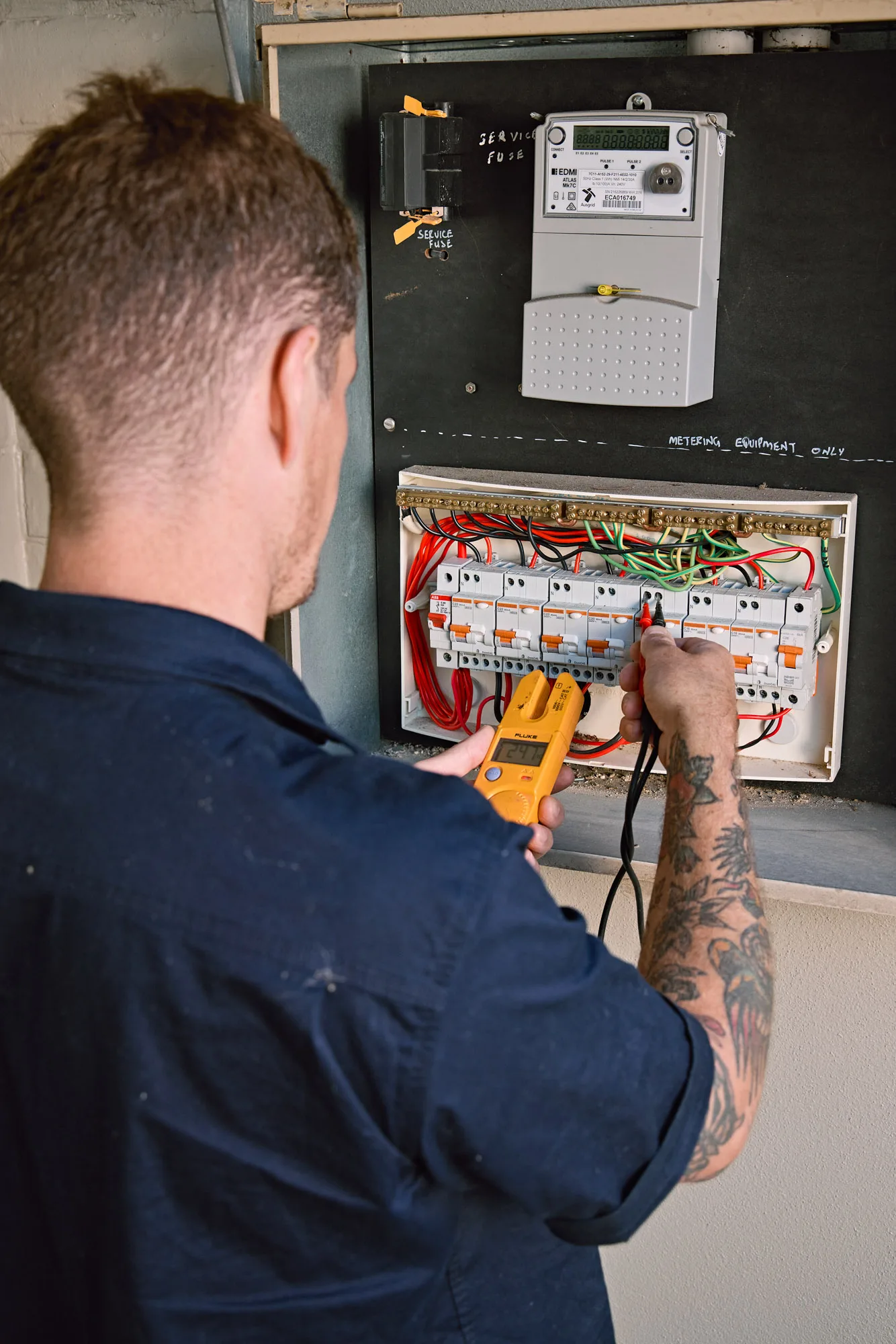
Plenty of people assume swapping in a bigger breaker cures constant tripping. It doesn't.
A breaker is sized to protect the wiring behind it, not to be upgraded until it stops tripping. Fitting a higher-rated breaker on wiring that can't safely carry that much current removes the protection the breaker was there to provide.
If a circuit trips constantly, the fix is finding out why, not raising the threshold until the symptom disappears.
The same goes for jamming the breaker in the "on" position by hand. That defeats the entire safety mechanism, and it's exactly the kind of shortcut that turns a nuisance trip into a genuine fire risk.
What To Do Before We Arrive
- Unplug whatever was running when the breaker tripped.
- Reset it once. If it holds, the load or appliance was likely the cause.
- Don't reset it repeatedly if it keeps tripping immediately. That's a sign of a genuine fault.
- Call (02) 9538 7444 if resetting doesn't hold or you notice anything unusual at the board.
How We Fix It, Step by Step
We isolate and test each circuit individually to confirm exactly which one is at fault, rather than guessing from the breaker's position on the board alone.
Once confirmed, we trace the cause, whether that's one appliance's own circuit, a loose terminal, or damaged cabling, and put it right.
Whatever we uncover gets talked through in plain terms before any price is confirmed, and a bigger job than expected always gets your sign-off first.
We run the circuit under load one final time before packing up, and notifiable work leaves you with a Certificate of Compliance. That's proof the job met standard, not just that the lights came back on.
The Thornleigh Pattern We Keep Seeing
Older switchboards in Thornleigh's pre-war and post-war housing, particularly around Norman Avenue and Chilvers Road, were fitted with breakers sized for a much lighter household load than a modern home actually runs.
Solar systems, EV chargers and ducted heating all get added to these original boards over the years, and repeated tripping is often the board's way of signalling it's finally reached its limit.
We see this pattern most in homes that have been extended in stages over decades, where each renovation added load without anyone stepping back to check whether the board could actually cope with all of it together.
Preventing the Next Trip
Repeated tripping is a pattern worth breaking, not just resetting.
- Split high-draw appliances over more than one circuit
- Swap out a worn breaker before it fails outright
- Upgrade the board if repeat tripping has become the new normal
- Book a wiring check if the property has never been properly assessed
- Add safety switches wherever a circuit is still running without one
If a full board swap turns out to be the right call, our switchboard replacement guide covers what that job looks like.
Nearby Suburbs and Related Faults
A breaker that trips often shares the same root cause as flickering lights or a fuse that's started blowing again, since all three symptoms tend to point back to one circuit under real strain.
We also cover Normanhurst, Hornsby and Wahroonga as part of our regular coverage.

Call Now About Your Tripped Circuit Breaker
Constant tripping deserves a proper diagnosis from someone who knows what to test, not another reset and a hope it holds this time around.
Call (02) 9538 7444 and we'll get to the bottom of it properly, often same or next day.
Common questions
Common Tripped Circuit Breaker FAQs
Here's what people ask us most once a breaker in their home starts tripping over and over again.
Should I turn off the mains if a breaker keeps tripping?
Not usually. Leave the tripped breaker off and other circuits running as normal, unless you notice heat or smell anywhere near the switchboard, in which case isolate at the mains and call us.
Is it my appliance or the circuit itself?
Unplug what was running when it tripped and reset the breaker. If it holds, the appliance was likely the cause. If it trips again with nothing plugged in, the fault is in the circuit.
Will my safety switch protect me from a tripping breaker?
They do different jobs. A safety switch trips on an earth fault to prevent shock, while a circuit breaker trips on overload or a short. Both tripping together usually means a more serious fault.
What does it cost to fix a circuit that keeps tripping?
A straightforward fault, like a faulty appliance or an overloaded circuit, is usually a short visit. A wiring fault costs more to trace, and you'll get a written quote before we start either way.
Can a tripping breaker cause a fire?
The breaker tripping is actually preventing a fire by cutting power before things overheat. The risk comes from resetting it repeatedly without finding out why it's tripping in the first place.
Can I keep using the circuit while I wait for someone to come out?
If it's held after one reset and nothing seems unusual, you can use it carefully in the meantime. If it trips again straight away, leave that circuit off until we've had a look.